Why the answer changes
On its own, a furnace burns gas all winter, so a 96% AFUE model pays for itself. Behind a heat pump it only runs on the coldest days, and the extra efficiency saves you less.
How each one vents
An 80% furnace sends hot exhaust up a metal flue, often the same chimney the water heater uses. Replacing one 80% furnace with another is straightforward.
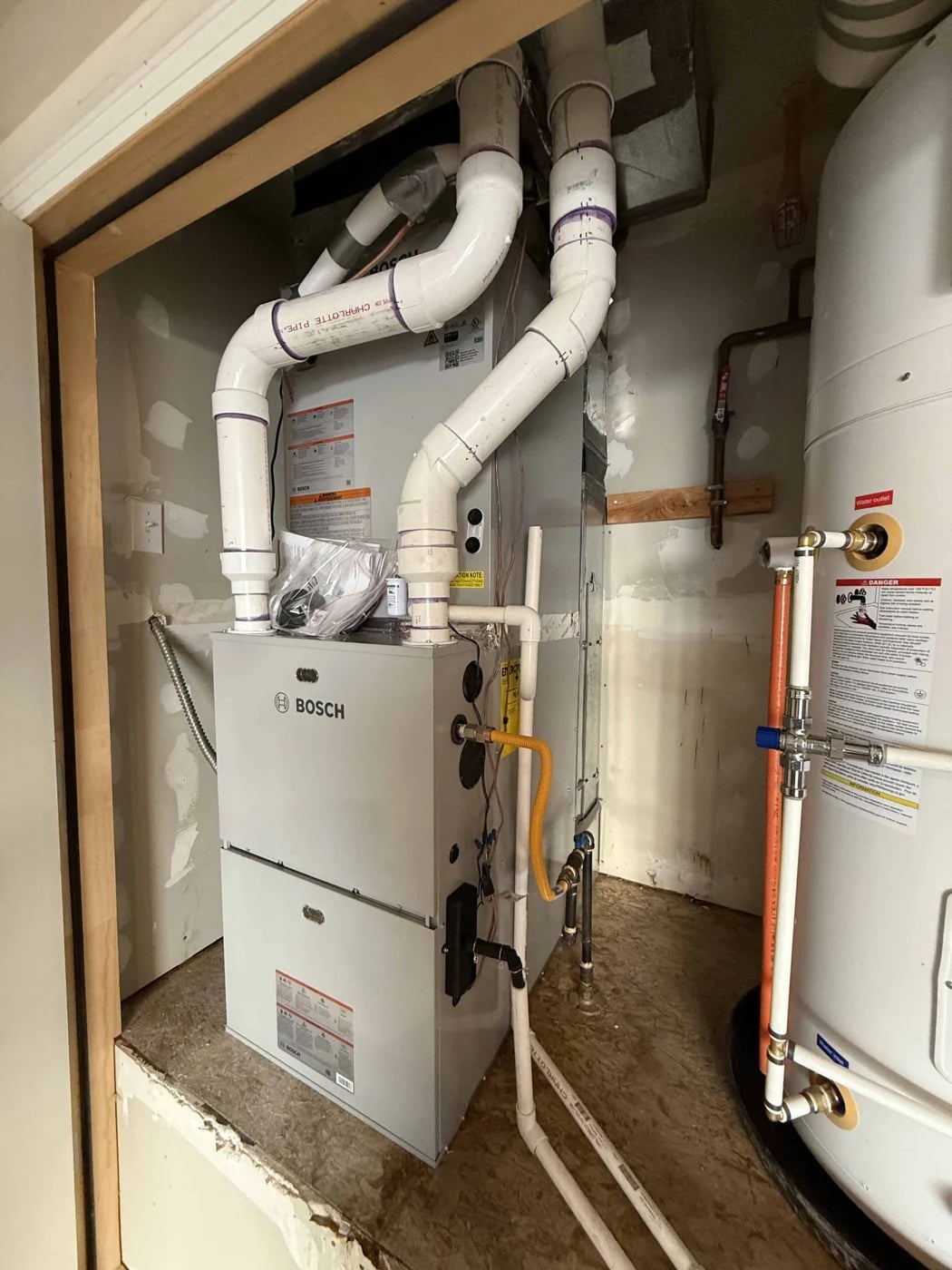
A 90%+ condensing furnace pulls so much heat out of the exhaust that it can vent through PVC. Two white pipes, intake and exhaust, run out a side wall, and the furnace needs a condensate drain. Your basement needs a route for those pipes.
The water heater
When a condensing furnace leaves a shared chimney, the water heater is left alone in a flue sized for two. It may need a liner or a new vent, so make sure that's on the quote.
What usually makes sense
If the house already has PVC venting, stay with a condensing furnace. If it has a shared metal flue and the furnace will mostly sit as backup, an 80% furnace can be the cheaper job overall. Compare the full installed price of each, venting included.
Send a photo of your furnace and its vent pipes, and we can usually tell you which way to go. For more on the furnace side, see heat pump installation on unicolorado.com.
Common questions
Does the water heater matter?
Yes, if it shares a chimney with the furnace. A condensing furnace leaves the old flue, and the water heater may then need a chimney liner or its own vent.