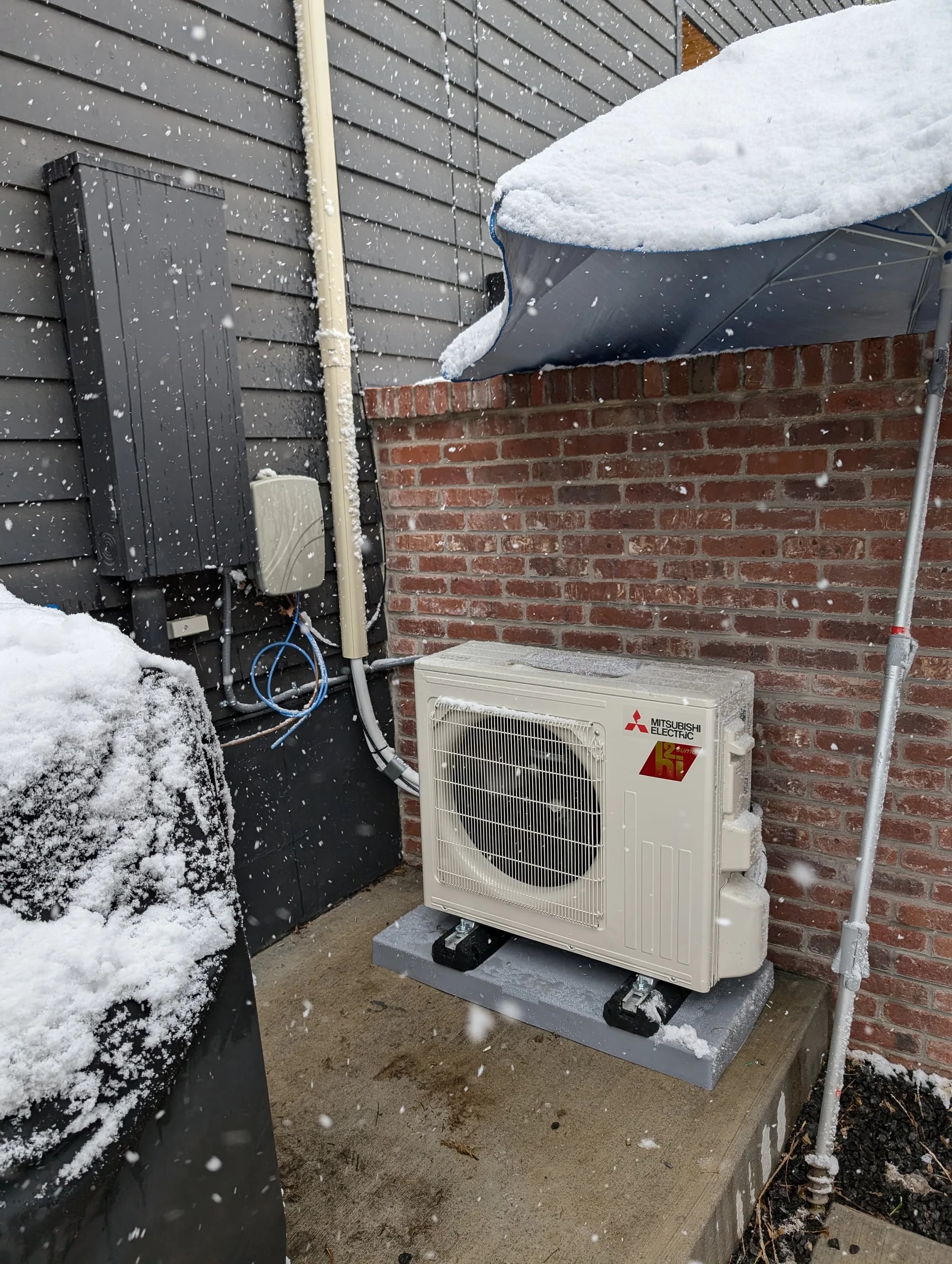
How it heats in the cold
A heat pump pulls heat out of the outdoor air, and there's usable heat in air far below freezing. Cold-climate models like the Bosch IDS Ultra and Mitsubishi Hyper-Heat keep running below zero, with less capacity as it gets colder. Denver's heating design temperature is close to 0°F, and most winter hours are much milder.
Defrost
On cold, damp days frost builds on the outdoor coil. The unit reverses for a few minutes to melt it, and you may see steam rise off the cabinet. That's normal. The melt water needs somewhere to go, which is one reason outdoor units here sit on stands or risers above the snow.
Backup heat
With dual fuel, the gas furnace takes over below a temperature you set, often between 20°F and 35°F depending on your gas and electric rates and how warm you like the house.
With an all-electric system, heat strips in the air handler add heat when the heat pump can't keep up alone.
What it means for your choice
Most of our customers replacing the whole system keep gas for the coldest nights. The furnace covers the hardest hours and the heat pump does the rest of the year. Going all electric means sizing the heat pump for the full winter load.
For equipment that heats well in deep cold, see cold-climate heat pump installation.
Common questions
Does a heat pump stop working when it gets cold?
No. Cold-climate models keep heating well below 0°F with less capacity. In a dual fuel system the furnace takes over at the temperature you set, and an all-electric system uses backup strips on the coldest nights.