Morning
The crew covers the floors from the door to the equipment, shuts off power and gas, and recovers the refrigerant from the old system. The old outdoor unit comes out, and on a dual fuel job the old furnace does too.
Indoors
The new furnace or air handler goes in, and the coil sits on top of an upflow furnace. Sheet metal transitions connect it to the supply and return ducts. A condensing furnace gets PVC intake and exhaust pipes and a condensate drain. The filter goes where you can reach it.
Outdoors
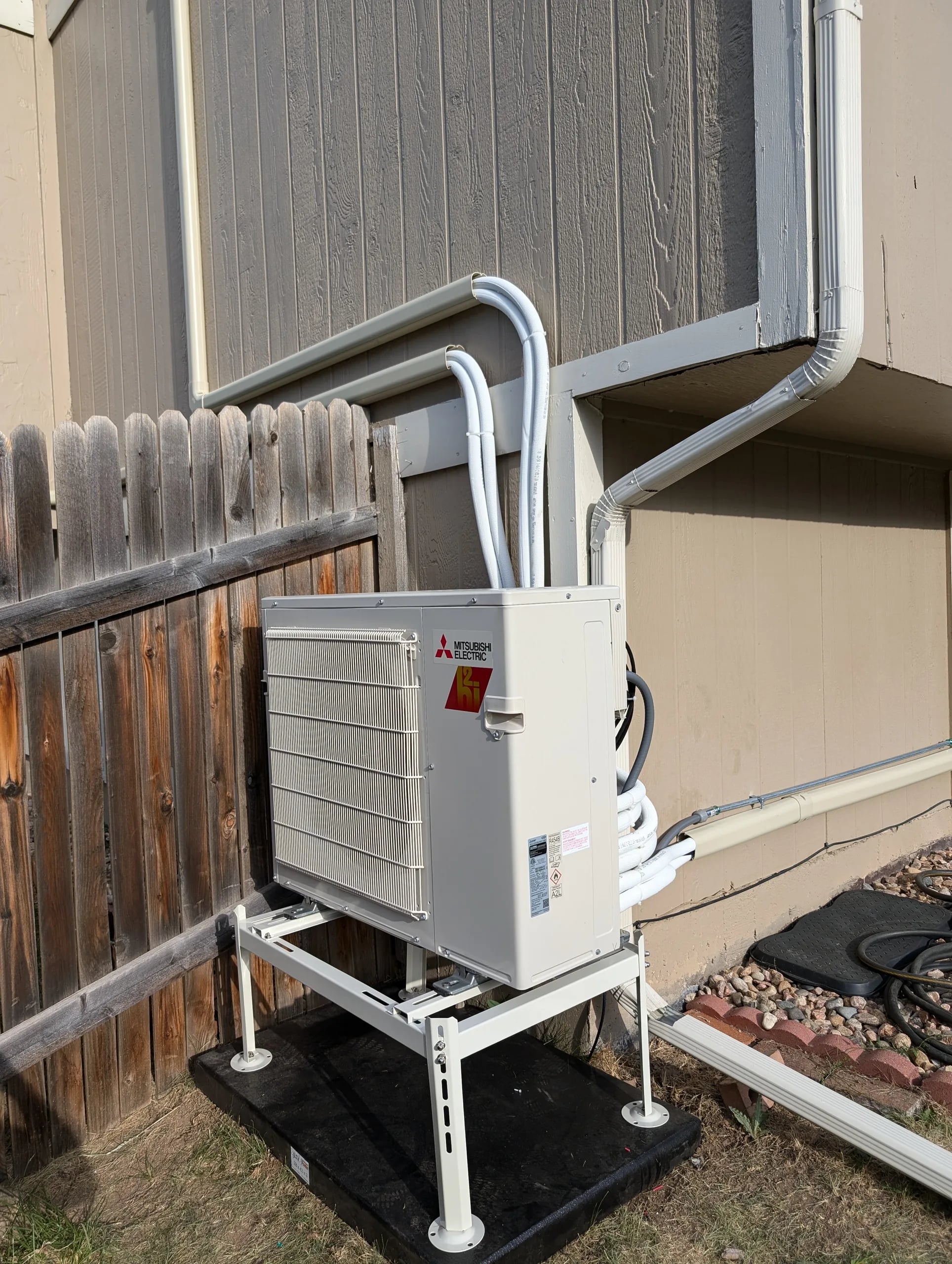
The outdoor unit goes on a pad, a riser stand or wall brackets, level and above the snow. The line set connects it to the coil with a larger, insulated suction line and a smaller liquid line. The electrician runs the circuit to a disconnect beside the unit.
The work you won't see
On a ducted system, joints are brazed with nitrogen flowing through the pipe to keep scale out. Mini-split lines connect with flare fittings tightened to the maker's torque. The system is pressure tested, then pulled into a deep vacuum to remove air and moisture before the refrigerant is released. At startup the charge is checked with gauges and the airflow is set.
Before the crew leaves
- The thermostat is set up and shown to you, including the switchover temperature on dual fuel.
- You know where the filter is and how to change it.
- The old equipment is gone and the work area is clean.
- Model and serial numbers are recorded for the warranty.
Our work is backed by a quality installation guarantee.
Common questions
Do I need to be home?
At the start, to walk the crew through the house, and at the end, for the walkthrough of the thermostat and filter. You can be away in between.